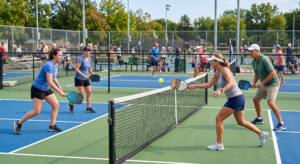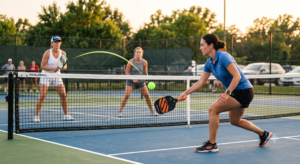
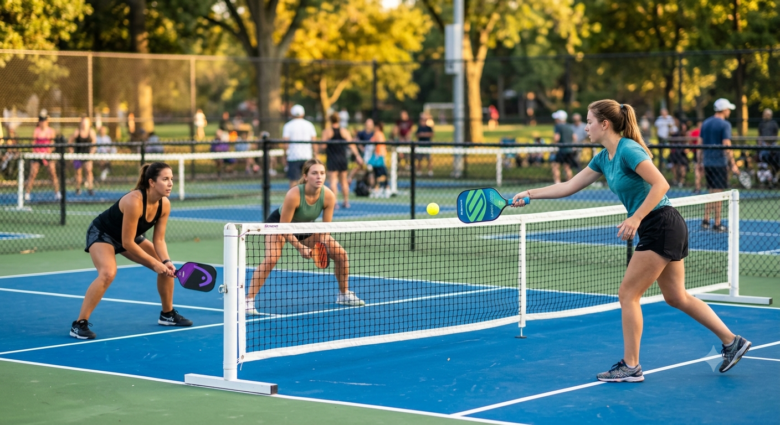
If you’ve recently started playing pickleball, you’ve probably heard experienced players say, “Just dink it.” At first, the term might sound unusual, but it’s one of the most important skills you’ll ever learn. In fact, many matches are won not by powerful smashes but by soft, controlled shots that force opponents into making mistakes.
Learning how to dink can transform your game. It helps you control the pace of rallies, create scoring opportunities, and dominate the non-volley zone—commonly known as the kitchen. Whether you’re completely new to pickleball or looking to sharpen your skills, understanding the dink is essential for becoming a smarter, more consistent player.
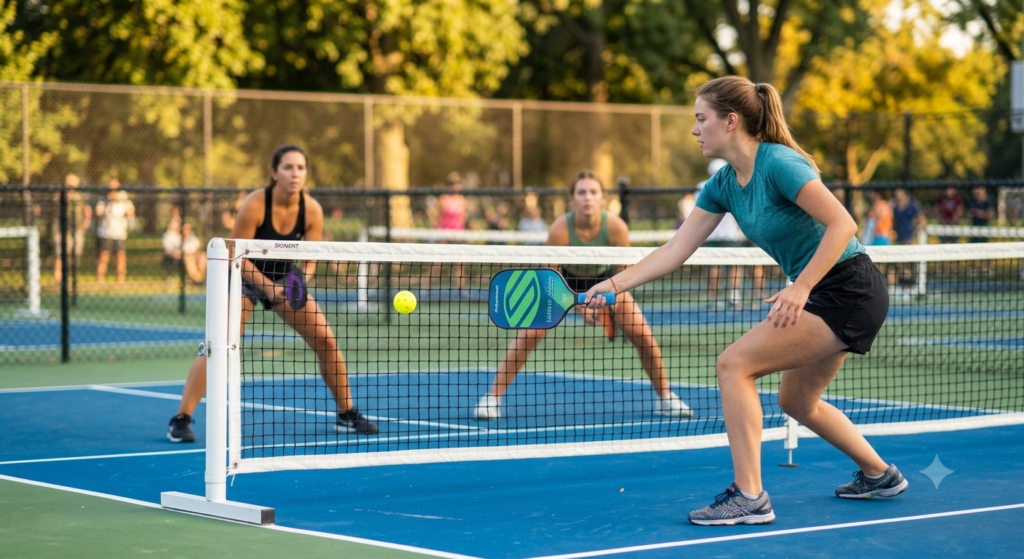
Why the Dink Is So Important
Many beginners believe pickleball is all about hitting the ball as hard as possible. While power has its place, experienced players know that patience and precision usually win more points.
A well-executed dink keeps the ball low over the net, making it difficult for your opponents to attack. Instead of relying on speed, you’re forcing them into uncomfortable positions where they’re more likely to hit the ball into the net or pop it up for an easy winner.
The best pickleball players use dinks to:
- Control the pace of the game.
- Reduce unforced errors.
- Create openings in their opponents’ defense.
- Move opponents out of position.
- Set up offensive shots.
If you watch high-level tournaments, you’ll notice that many rallies begin with several controlled dinks before anyone attempts an aggressive shot.
What Is a Dink in Pickleball?
A dink is a soft, controlled shot that lands in your opponent’s non-volley zone (the kitchen). The goal isn’t to hit a winner immediately but to keep the ball low and force your opponent into a difficult return.
Unlike a drive or smash, a dink travels slowly with a gentle arc, clearing the net by only a small margin before landing softly inside the kitchen.
A good dink should:
- Land inside the kitchen.
- Bounce low.
- Prevent your opponent from attacking.
- Give you time to recover your position.
- Encourage longer rallies where patience becomes an advantage.
Understanding the Kitchen
The kitchen, officially called the non-volley zone, extends seven feet from each side of the net.
Players cannot volley the ball while standing inside this area. Because of this rule, soft shots that land in the kitchen are incredibly effective. Your opponent must let the ball bounce before returning it, reducing their ability to hit aggressively.
Learning to control the kitchen is one of the biggest milestones for every beginner.
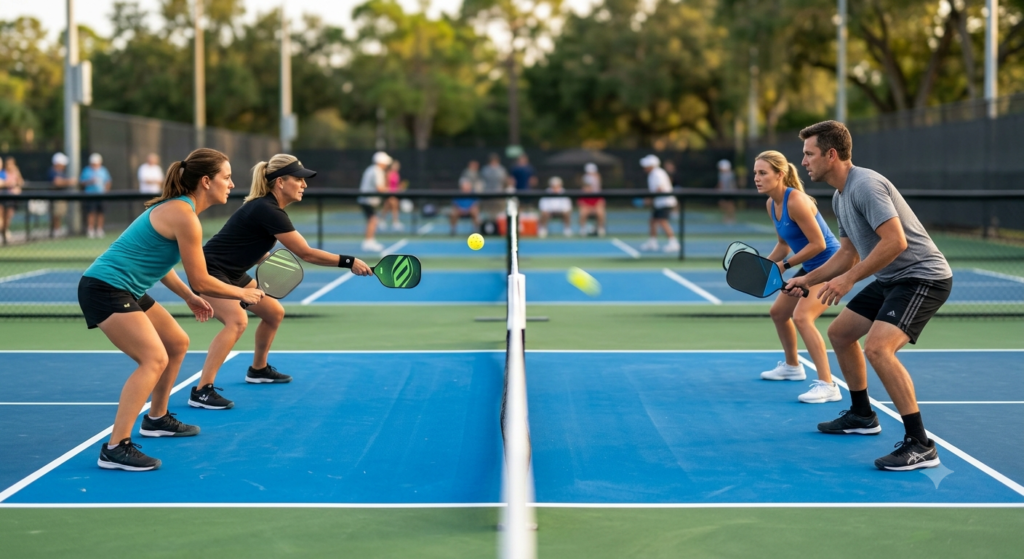
Why Beginners Struggle with Dinking
Many new players find dinking frustrating because it requires touch instead of power.
Common reasons include:
- Swinging too hard.
- Holding the paddle too tightly.
- Trying to end every rally quickly.
- Standing too far from the kitchen line.
- Poor footwork.
These mistakes often cause the ball to sail long, pop up too high, or land in the net.
The good news is that every player can improve with consistent practice.
How to Hit the Perfect Dink
Mastering the dink starts with proper fundamentals.
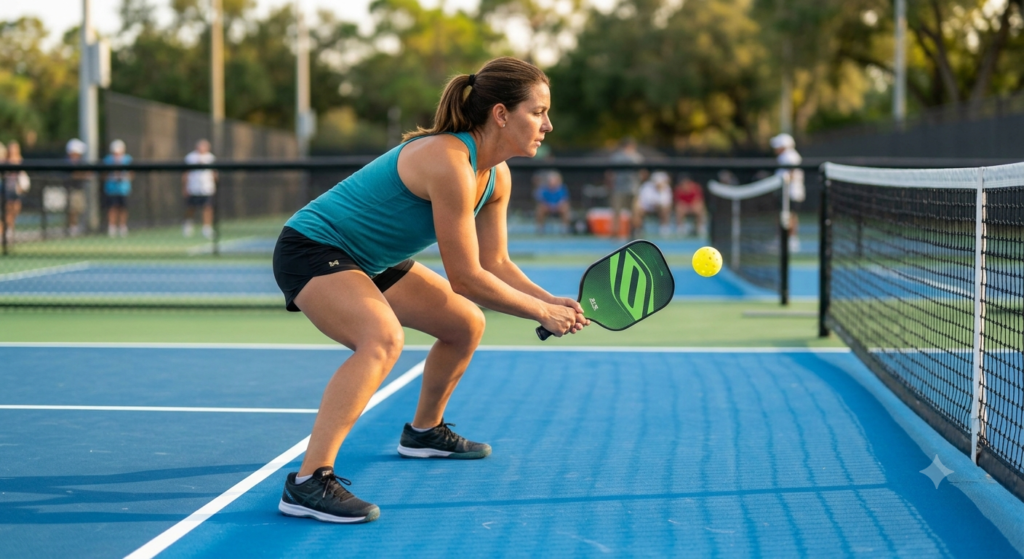
1. Use a Relaxed Grip
Grip pressure should remain light.
A relaxed hand gives you better control and allows the paddle to absorb the ball rather than hitting it forcefully.
Imagine holding a tube of toothpaste without squeezing any toothpaste out.
2. Stay Low
Bend your knees and keep your center of gravity low.
This athletic position improves balance and makes it easier to react to your opponent’s next shot.
3. Keep Your Paddle in Front
Your paddle should always remain in front of your body, ready for quick exchanges at the kitchen line.
Avoid taking large backswings.
Short, compact movements produce the best dinks.
4. Lift the Ball Gently
Rather than swinging downward, slightly lift the paddle through the ball using your shoulder and forearm.
The motion should feel smooth and controlled.
5. Aim for the Opponent’s Feet
One of the safest targets is your opponent’s feet.
A low bounce forces them to lift the ball, increasing your chances of receiving an attackable return.
Forehand vs. Backhand Dinks
A complete player becomes comfortable using both sides.
Forehand Dink
The forehand offers:
- Better reach.
- Natural control.
- Easier placement.
- Comfortable movement for most beginners.
Backhand Dink
The backhand provides:
- Faster reactions.
- Better control during quick exchanges.
- Reduced body movement.
- Easier transitions while covering the middle of the court.
Practice both equally to become a more versatile player.
Cross-Court vs. Straight Dinks
Not all dinks are created equal.
Cross-Court Dink
This is often considered the highest-percentage shot because:
- The net is slightly lower in the middle.
- The diagonal distance is longer.
- You have more margin for error.
- The angle pulls opponents off the court.
Straight Dink
A straight dink travels directly across the net.
While it can pressure opponents, it offers less room for error and should be used strategically.
Experienced players typically rely on cross-court dinks during longer rallies before changing direction to surprise their opponents.
The Mental Side of Dinking
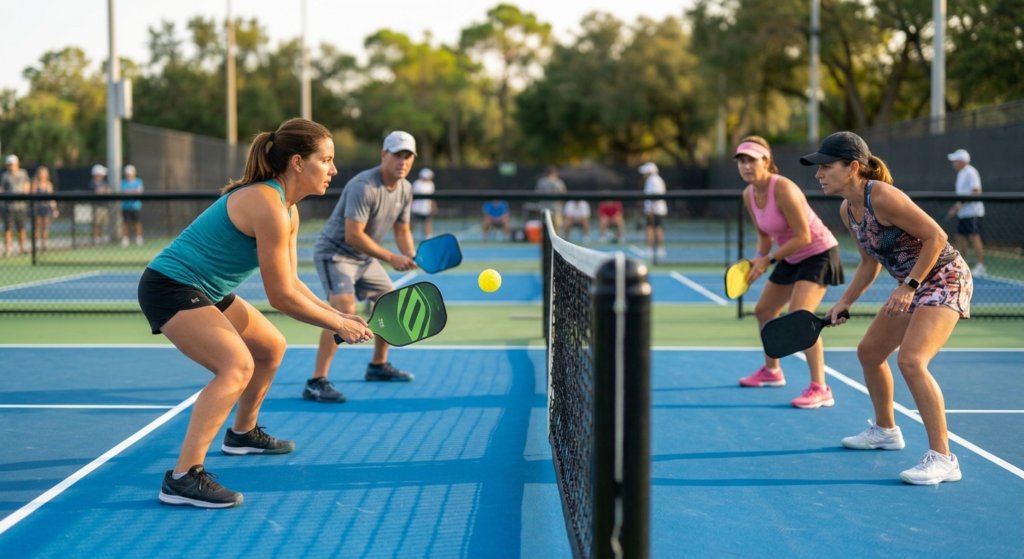
One of the biggest adjustments beginners must make is learning patience.
It’s tempting to attack every ball, especially when you think you see an opening. However, forcing an aggressive shot too early often leads to unnecessary mistakes.
Successful dinking is about waiting for the right opportunity rather than trying to win every exchange immediately.
Ask yourself during each rally:
- Is this ball attackable?
- Am I balanced?
- Is my opponent out of position?
- Can I force one more difficult shot instead?
Often, one extra patient dink creates the opening you’ve been waiting for.
(Part 1 of 2 – Next: Common dinking mistakes, practice drills, when to speed up the ball, FAQ, and an engaging ending.)