Even experienced players occasionally struggle with the third-shot drop. For beginners, recognizing common mistakes is one of the fastest ways to improve.
Hitting the Ball Too Hard
The most frequent mistake is treating the third shot like an attacking drive.
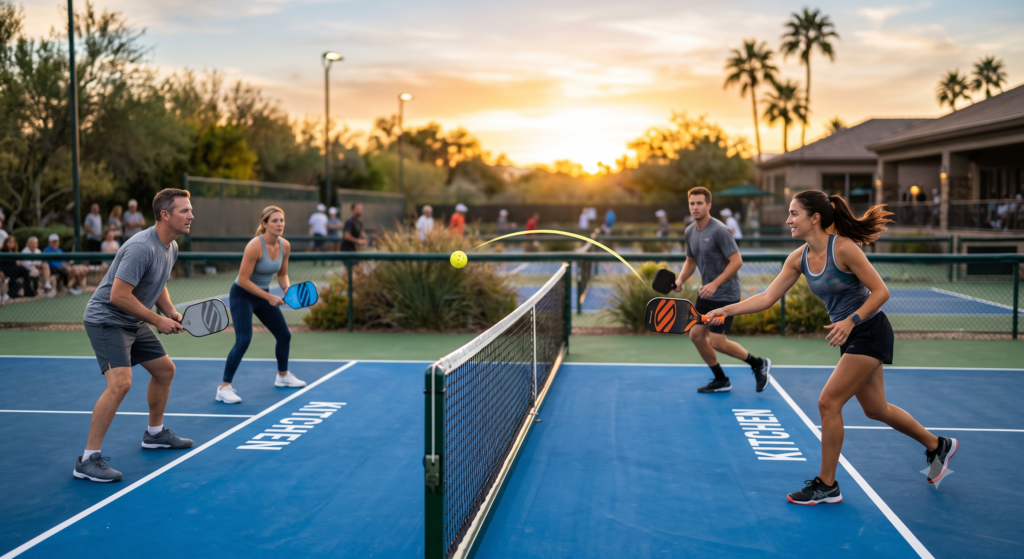
A successful third-shot drop is not about speed. If you hit the ball too hard, your opponents can volley aggressively and keep you pinned at the baseline.
Focus on touch and placement instead of power.
Aiming Too Close to the Net
Many beginners try to make the perfect shot by barely clearing the net.
While this may work occasionally, it often results in unnecessary errors.
A better approach is to allow the ball to travel in a higher arc, clearing the net comfortably before dropping into the kitchen.
Consistency wins more rallies than risky perfection.
Using Too Much Wrist
Excessive wrist movement creates inconsistent contact and unpredictable ball flight.
Instead, keep your wrist relatively stable and allow your shoulder and arm to guide the motion.
A smooth, controlled swing produces far more reliable results.
Standing Still After the Shot
One of the biggest tactical mistakes happens after the ball leaves the paddle.
Many beginners admire their shot instead of moving forward.
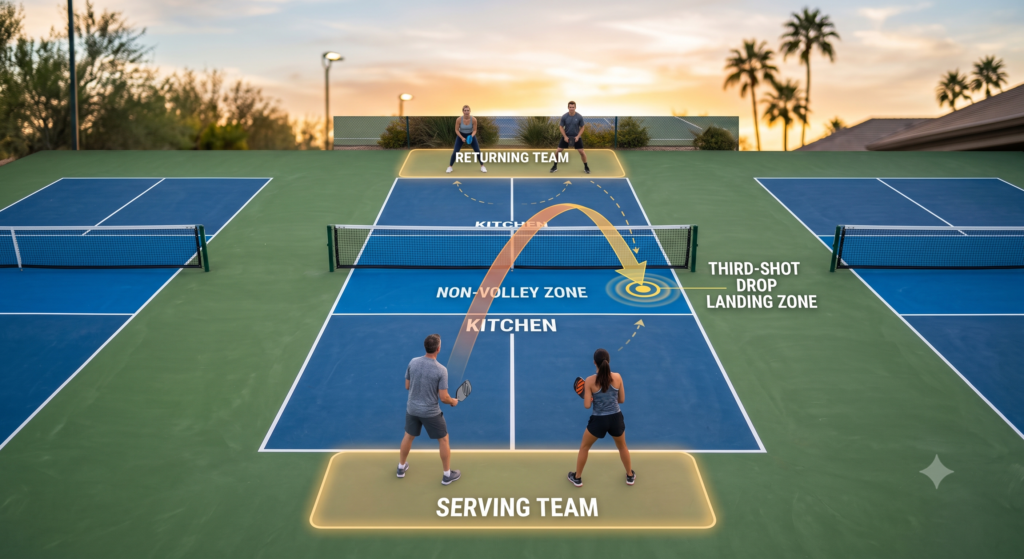
The purpose of the third-shot drop is to help your team reach the kitchen line. Once you’ve hit the shot, continue advancing with your partner while staying ready for the next ball.
Third Shot Drop vs. Third Shot Drive
Many players wonder whether they should always hit a drop or occasionally choose a drive.
The answer depends on the situation.
Choose a Third-Shot Drop When:
- Your opponents are already at the kitchen line.
- You want to move safely toward the net.
- The return of serve is deep.
- You’re looking to slow the pace of the rally.
- You prefer consistency over risk.
Choose a Third-Shot Drive When:
- Your opponents remain deeper in the court.
- You receive a shorter return.
- You notice an opponent is out of position.
- You have a clear attacking opportunity.
The best players don’t rely on only one option. They understand when each shot gives them the greatest advantage.
Five Practice Drills to Improve Your Third Shot Drop
Regular practice is the fastest path to consistency.
Drill 1: Kitchen Target Practice
Place cones or towels inside the kitchen.
Hit 30 third-shot drops, aiming to land each ball on or near the targets.
This drill improves accuracy and touch.
Drill 2: Cross-Court Drops
Practice hitting third-shot drops diagonally across the court.
Cross-court shots provide a larger target area and encourage better control.
Alternate between the left and right sides.
Drill 3: Partner Reset Drill
Have your partner stand at the kitchen line and volley every ball back toward you.
Your objective is to keep resetting the rally with controlled drops until both players comfortably reach the kitchen.
This drill simulates real match situations.
Drill 4: Move After Every Shot
Hit a drop, then immediately move two or three steps forward before preparing for the next ball.
This teaches the habit of transitioning from the baseline to the kitchen without hesitation.
Drill 5: Pressure Challenge
Attempt to hit ten successful third-shot drops in a row.
If you miss one, start again from zero.
This simple exercise develops concentration and prepares you for match pressure.
Pro Tips for Better Third-Shot Drops
Small adjustments can make a big difference.
Watch the Ball Until Contact
Keeping your eyes on the ball improves clean contact and consistency.
Stay Relaxed
Tension reduces feel. A relaxed grip helps absorb pace and create softer shots.
Practice Both Forehand and Backhand Drops
Opponents will not always hit to your stronger side. Becoming comfortable with both strokes makes you a more complete player.
Aim for the Middle
The middle of the court often creates confusion between opponents while providing a larger margin for error.
Trust the Process
The third-shot drop is one of the most challenging skills in pickleball. Don’t expect perfection after a few practice sessions. Improvement comes from repetition and patience.
Frequently Asked Questions
Is the third-shot drop only used in doubles?
No. Although it is most important in doubles, singles players can also use soft drop shots to change the pace of a rally and move forward strategically.
How long does it take to learn?
Most recreational players begin seeing noticeable improvement after several weeks of focused practice.
Like any skill, consistency develops through repetition rather than occasional use during matches.
Should every third shot be a drop?
Not necessarily.
The best players choose between a drop and a drive depending on court position, their opponents’ positioning, and the pace of the rally.
Learning when to use each shot is an important part of developing advanced strategy.
Can I Practice Alone?
Yes.
You can practice by hitting against a practice wall, aiming at marked targets on the court, or using a ball machine if one is available.
Solo practice is an excellent way to build muscle memory before applying the shot in competitive play.
Build Confidence One Drop at a Time
The third-shot drop is much more than another shot in your arsenal—it’s a gateway to smarter, more effective pickleball. By slowing the pace of the rally, moving confidently toward the kitchen line, and forcing your opponents into difficult positions, you turn defense into opportunity.
Don’t worry if your first attempts aren’t perfect. Every successful player has spent countless hours refining this skill. Focus on proper technique, practice consistently, and celebrate small improvements along the way.
The next time you step onto the court, challenge yourself to use the third-shot drop whenever the opportunity arises. With every well-placed shot, you’ll gain confidence, improve your court positioning, and discover why this simple yet powerful technique is considered one of the true foundations of winning pickleball doubles.