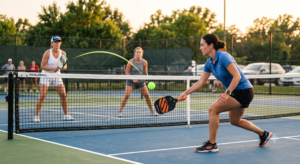
Starting your pickleball journey is exciting. The sport is easy to learn, incredibly social, and suitable for players of all ages. However, while beginners often improve quickly during their first few games, many unknowingly develop habits that slow their progress and make winning matches more difficult.
The good news is that most beginner mistakes are easy to correct once you recognize them. Small improvements in positioning, shot selection, movement, and communication can dramatically increase your consistency and confidence on the court.
Whether you play recreationally with friends or are preparing for your first tournament, avoiding these common pickleball mistakes will help you become a smarter and more effective player.
Let’s explore the most frequent beginner errors and, more importantly, how to fix them.
Why Beginners Make So Many Mistakes
Pickleball may look simple, but it combines elements of tennis, badminton, and table tennis into a fast-paced game that rewards strategy more than power.
Many new players naturally rely on instincts developed from other sports. While that approach can work occasionally, pickleball has unique rules and tactics that require a different mindset.
Successful players focus on:
- Smart positioning
- Patience during rallies
- Controlled shot placement
- Teamwork in doubles
- Consistency instead of power
Once these fundamentals become habits, improvement comes much faster.
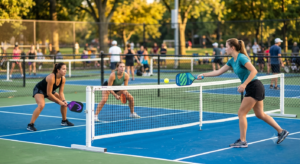
Mistake 1: Staying at the Baseline
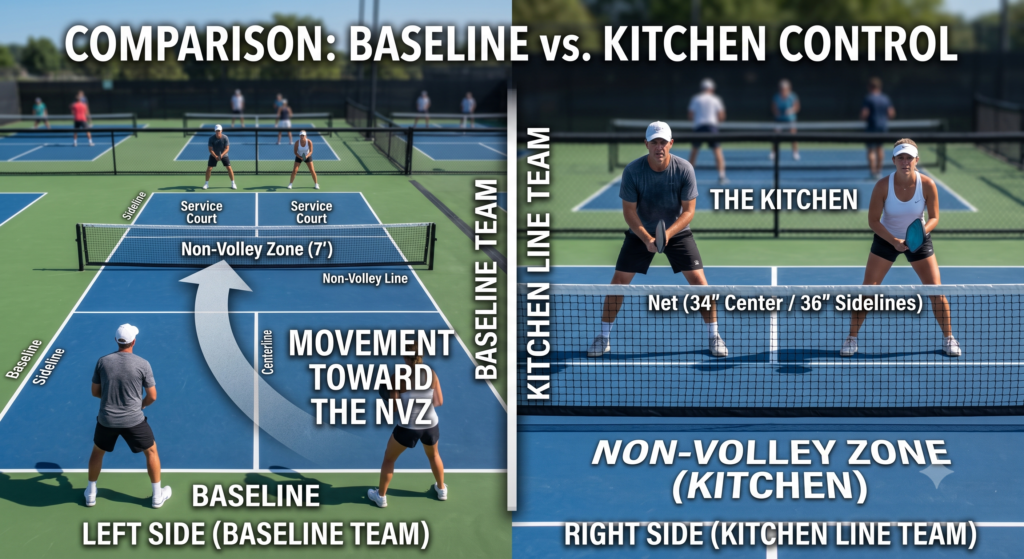
One of the biggest beginner mistakes is remaining at the baseline after serving or returning.
Many players believe staying back gives them more time to react. In reality, it usually gives their opponents complete control of the rally.
Why It’s a Problem
Players standing at the baseline:
- Hit more defensive shots.
- Give opponents easier volley opportunities.
- Allow opponents to control the kitchen line.
- Cover more court than necessary.
How to Fix It
After serving:
- Hit a deep serve.
- Prepare for the return.
- Play a controlled third-shot drop.
- Move toward the kitchen line with your partner.
After returning:
- Hit a deep return.
- Advance immediately to the kitchen line.
Controlling the non-volley zone is one of the biggest advantages in pickleball.
Mistake 2: Hitting Every Ball as Hard as Possible
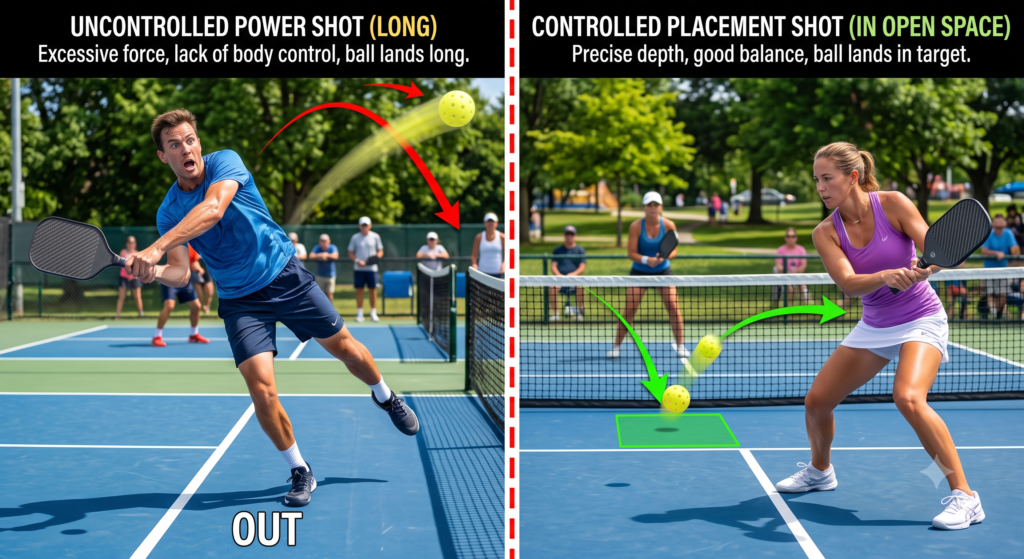
Many beginners assume power wins points.
While powerful shots have their place, pickleball rewards control and placement far more often than raw speed.
Experienced players frequently defeat stronger hitters simply by absorbing pace and forcing mistakes.
Why It’s a Problem
Hard shots often result in:
- Balls sailing long
- Shots into the net
- Easy counterattacks
- Unforced errors
How to Fix It
Instead of trying to hit winners on every shot:
- Focus on consistency.
- Aim for open space.
- Keep the ball low.
- Use soft shots when appropriate.
Remember:
A well-placed slow shot is usually more effective than a poorly placed fast shot.
Mistake 3: Ignoring the Kitchen Line
The kitchen, officially called the non-volley zone, is the most important area on the court.
Beginners often fear moving close to the net because they worry about getting hit by fast shots.
Unfortunately, avoiding the kitchen line gives opponents a major advantage.
Why It’s a Problem
Players away from the kitchen:
- Lose control of rallies.
- React instead of attack.
- Have fewer volley opportunities.
- Struggle against experienced opponents.
How to Fix It
Learn to move confidently toward the kitchen whenever possible.
Once there:
- Stay balanced.
- Keep your paddle up.
- Bend your knees.
- Be ready for quick volleys.
Most winning doubles teams spend the majority of each rally at the kitchen line.
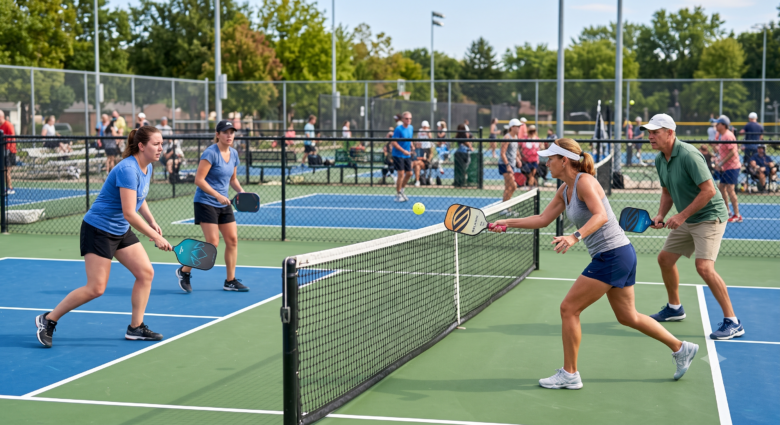
Mistake 4: Poor Court Positioning
Another common beginner mistake is standing in the wrong place.
Some players stand too close to their partner.
Others leave large gaps between them.
Both situations make defending much harder.
Why It’s a Problem
Poor positioning creates the following:
- Open angles
- Easy passing shots
- Confusion over who should play the ball
- Reduced court coverage
How to Fix It
Imagine an invisible rope connecting you to your partner.
Whenever one player moves:
- Left
- Right
- Forward
- Backward
The other player should move with them.
Maintaining equal spacing allows both players to cover the court efficiently.
Mistake 5: Forgetting to Communicate
Pickleball doubles is a team sport.
Yet many beginners barely speak during rallies.
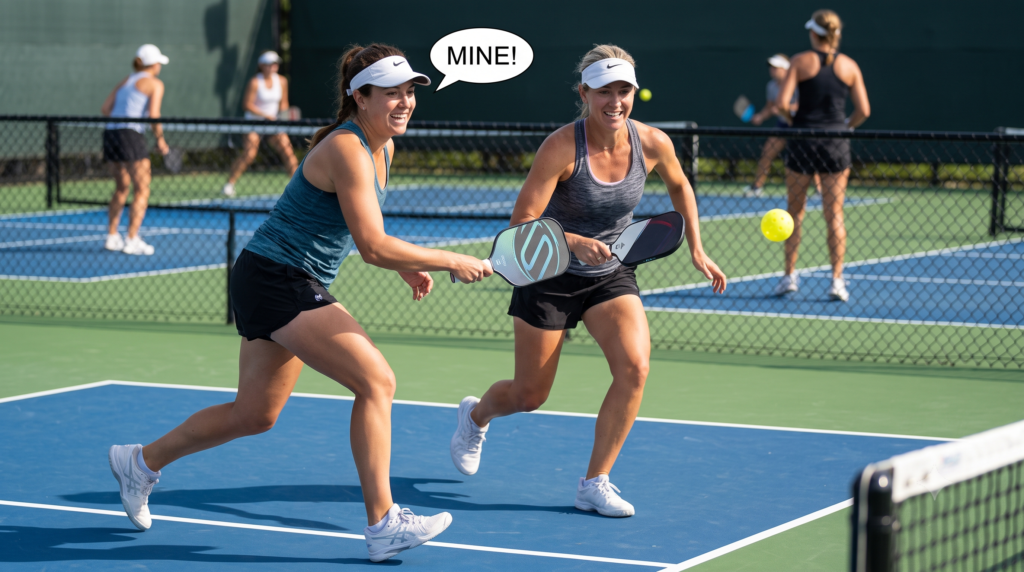
This often leads to hesitation, missed shots, or even players colliding while chasing the same ball.
Why It’s a Problem
Poor communication causes the following:
- Confusion
- Lost points
- Missed opportunities
- Reduced confidence
How to Fix It
Use simple commands during every rally.
Examples include:
- “Mine!”
- “Yours!”
- “Switch!”
- “Out!”
- “Bounce!”
Clear communication builds trust between partners and makes decision-making much easier under pressure.
Even experienced teams constantly talk throughout a match.
Mistake 6: Trying to End Every Rally Too Quickly
Beginners often become impatient after only a few shots.
They attempt risky winners from difficult positions instead of waiting for better opportunities.
Experienced players understand that patience wins matches.
Why It’s a Problem
Low-percentage attacks usually result in:
- Balls into the net
- Shots out of bounds
- Easy counterattacks
- Unnecessary mistakes
How to Fix It
Rather than forcing the point:
- Keep the rally alive.
- Wait for a high ball.
- Attack only when you’re balanced.
- Let your opponents make the first mistake.
Many pickleball matches are decided not by spectacular winners but by which team makes fewer unforced errors.
Don’t Stop Here—The Biggest Mistakes Are Still Ahead
You’ve already discovered six of the most common mistakes that hold beginner pickleball players back. But there are four more critical errors that can make the difference between winning and losing close matches.
In Part 2, you’ll learn how to fix poor footwork, develop smarter serving habits, know when to attack (and when not to), create an effective practice routine, and follow a step-by-step improvement plan that will help you progress faster than most new players.
Continue reading: 10 Common Pickleball Mistakes Beginners Make (And How to Fix Them) – Part 2