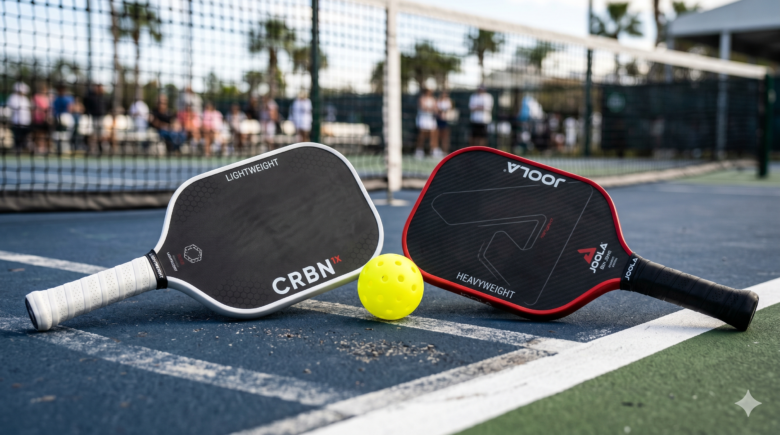
Choosing the right pickleball paddle can have a bigger impact on your game than many players realize. While factors such as paddle shape, core material, and surface texture often get most of the attention, paddle weight plays a crucial role in determining how a paddle feels and performs on the court.
A difference of just a few ounces can affect your power, control, reaction speed, comfort, and even your risk of injury. That’s why understanding the differences between lightweight and heavyweight pickleball paddles is essential before making your next purchase.
Whether you’re a beginner looking for your first paddle or an experienced player considering an upgrade, this guide will help you understand the advantages and drawbacks of each option so you can make the best decision for your playing style.
Why Paddle Weight Matters
Paddle weight directly influences how the paddle moves through the air and how much force it generates when contacting the ball.
Generally speaking:
- Lightweight paddles prioritize speed and maneuverability.
- Heavyweight paddles emphasize power and stability.
- Midweight paddles aim to provide a balance between both.
The challenge is finding the weight that complements your strengths while minimizing your weaknesses.
What Is Considered a Lightweight Pickleball Paddle?
Most manufacturers classify paddles under 7.5 ounces as lightweight.
Typical Weight Range
- 6.8 oz to 7.4 oz
Common Characteristics
- Faster hand speed
- Easier maneuverability
- Reduced arm fatigue
- Better reaction time at the kitchen line
These paddles are particularly popular among players who rely on quick exchanges and finesse rather than raw power.
Benefits of Lightweight Pickleball Paddles

Faster Reactions at the Net
During fast-paced kitchen battles, fractions of a second matter. A lighter paddle allows players to react more quickly to volleys and speed-ups.
Less Fatigue During Long Matches
Since you’re moving less weight throughout the match, lightweight paddles can help reduce fatigue, especially during tournaments or extended playing sessions.
Better for Players with Arm Issues
Players dealing with tennis elbow, wrist discomfort, or shoulder pain often find lightweight paddles easier to handle.
Improved Paddle Control
Many players appreciate the ability to make subtle adjustments during dinks, resets, and touch shots.
Drawbacks of Lightweight Paddles
Despite their advantages, lightweight paddles aren’t perfect.
Reduced Power
Because lighter paddles carry less mass, players often need to generate more swing speed to achieve the same power as a heavier paddle.
Less Stability
Against hard-hit shots, lightweight paddles may twist slightly more on off-center hits.
Can Feel Less Solid
Some players prefer the stable, connected feel of a heavier paddle during drives and blocks.
What Is Considered a Heavyweight Pickleball Paddle?
Heavyweight paddles typically weigh more than 8.3 ounces.
Typical Weight Range
- 8.4 oz to 9.0 oz+
Common Characteristics
- Increased power
- Enhanced stability
- Stronger drives and serves
- More momentum through the ball
These paddles are often favored by aggressive players who want maximum force behind their shots.
Benefits of Heavyweight Pickleball Paddles
More Power with Less Effort
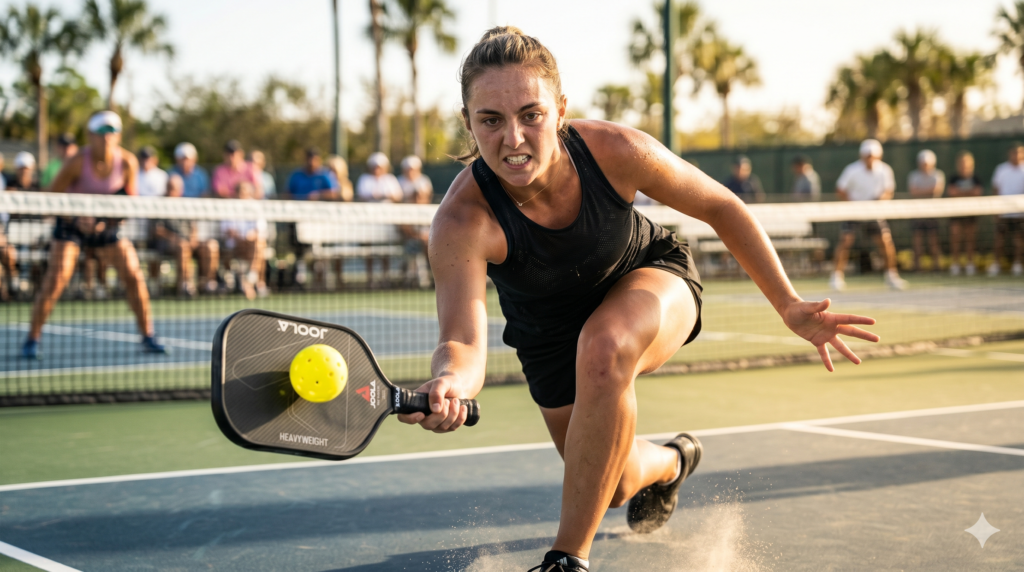
The extra mass helps transfer energy to the ball, allowing players to generate power without swinging as hard.
Increased Stability
Heavy paddles resist twisting better when returning powerful shots, resulting in more consistent contact.
Stronger Blocks and Counters
Many advanced players appreciate the solid feel a heavier paddle provides during defensive exchanges.
Better Plow-Through
Heavy paddles tend to move through the ball more effectively, creating a confident and stable hitting experience.
Drawbacks of Heavyweight Paddles
Slower Hand Speed
The extra weight can reduce reaction speed during quick net exchanges.
Greater Fatigue
Playing multiple matches with a heavy paddle may lead to arm and shoulder fatigue.
Higher Risk of Overuse Injuries
Improperly matched paddle weight can contribute to discomfort in the wrist, elbow, or shoulder over time.
Lightweight vs Heavyweight Pickleball Paddles
| Feature | Lightweight Paddle | Heavyweight Paddle |
|---|---|---|
| Power | Lower | Higher |
| Control | Excellent | Good |
| Hand Speed | Excellent | Moderate |
| Stability | Moderate | Excellent |
| Maneuverability | Excellent | Moderate |
| Fatigue | Lower | Higher |
| Net Play | Excellent | Good |
| Drives & Serves | Good | Excellent |
Which Paddle Weight Fits Your Playing Style?
Beginners
Most beginners benefit from a midweight paddle between 7.5 and 8.2 ounces. This range offers a comfortable balance of power and control while helping new players develop proper technique.
Seniors
Many senior players prefer lightweight paddles because they reduce strain on the arm and improve maneuverability.
Former Tennis Players
Tennis players often transition comfortably into slightly heavier paddles because they’re already accustomed to generating power and handling larger racquets.
Control-Oriented Players
Players who enjoy dinking, resetting, and strategic placement often favor lighter paddles for their quick handling and precision.
Power Players
Those who rely on aggressive drives, serves, and put-away shots may benefit from the added mass of a heavier paddle.
Common Paddle Weight Myths
Heavier Always Means Better
Not true. The best paddle is the one that complements your game and physical comfort.
Lightweight Paddles Lack Power
Modern paddle technology has significantly improved power generation, even in lighter models.
Professionals Only Use Heavy Paddles
Many professional players actually prefer paddles in the midweight range because they offer versatility across all areas of the game.
How to Find Your Ideal Paddle Weight
Step 1: Assess Your Playing Style
Determine whether you prioritize power, control, speed, or consistency.
Step 2: Consider Physical Comfort
If you’ve experienced arm, wrist, or shoulder discomfort, a lighter option may be more suitable.
Step 3: Test Different Weights
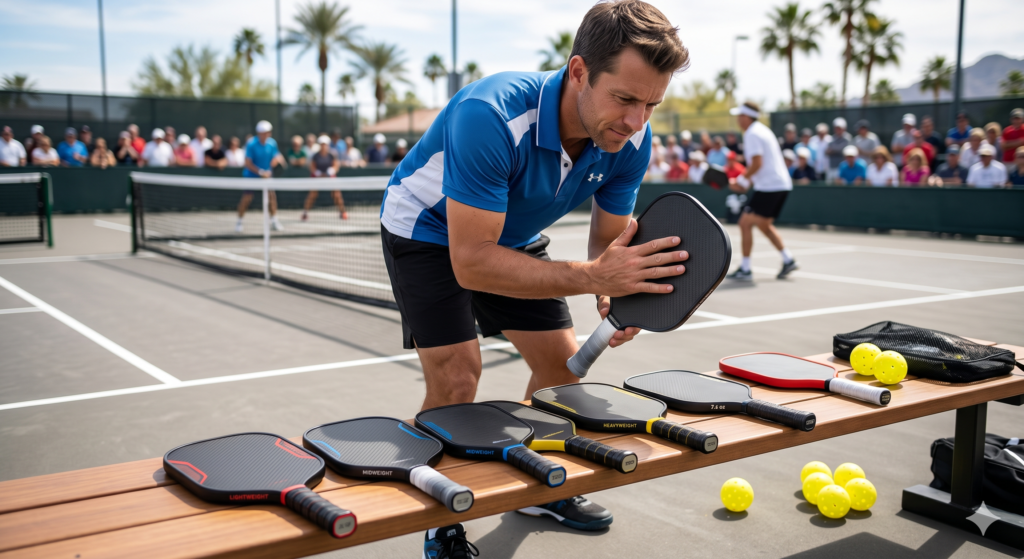
Whenever possible, demo paddles before purchasing. Small differences in weight can feel surprisingly significant.
Step 4: Think Long-Term
Choose a paddle you can comfortably use for several hours without fatigue rather than one that feels impressive for a few minutes.
The Weight That Wins for You
There is no universal “best” paddle weight in pickleball. The ideal choice depends on your skill level, playing style, physical condition, and personal preferences.
Lightweight paddles shine in speed, maneuverability, and comfort, making them excellent for quick exchanges and control-focused players. Heavyweight paddles excel in power, stability, and shot penetration, making them attractive for aggressive players who enjoy dictating points.
For most players, the sweet spot lies somewhere in the middle. However, understanding the strengths and limitations of each category will help you make a more informed decision and ultimately enjoy greater confidence on the court.
The next time you’re evaluating a paddle, don’t focus solely on brand names or marketing claims. Pay close attention to the weight in your hand—because the right weight may be the upgrade your game has been waiting for.