Pickleball doubles is where most players spend the majority of their time on the court. While having the right paddle can help, strategy often makes a much bigger difference than equipment. Many beginners focus on hitting harder shots, but experienced players know that positioning, patience, communication, and smart decision-making are what truly win matches.
The good news is that you do not need years of experience to improve your doubles game. By understanding a few fundamental strategies, you can quickly become a more effective player and help your team win more points.
This guide explores the best pickleball doubles strategies for beginners, explaining not only what to do but also why these tactics work.
Why Doubles Strategy Matters
Unlike singles, doubles is a game of teamwork and positioning. The court is smaller relative to the number of players, which means there is less open space to attack.
Success often comes from:
- Consistent shot placement
- Effective communication
- Court awareness
- Patience during rallies
- Limiting unforced errors
Players who master these fundamentals usually outperform opponents who rely solely on power.
Get to the Kitchen Line as Quickly as possible.
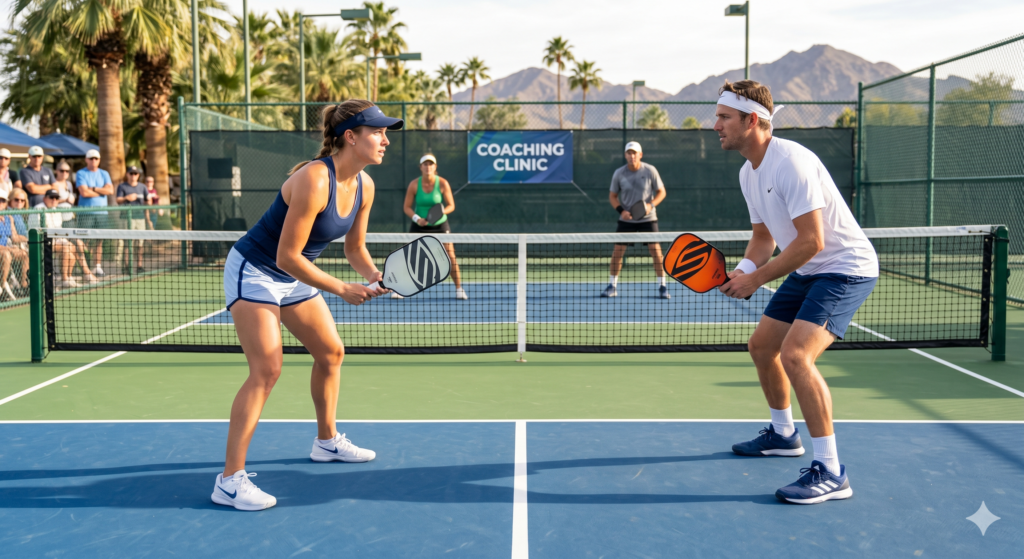
One of the most important principles in pickleball doubles is controlling the kitchen line, also known as the non-volley zone line.
Why is this position so valuable?
When standing near the kitchen line, you can:
- Reach more balls
- Volley aggressively
- Reduce your opponent’s angles
- Apply constant pressure
Many beginners stay near the baseline after serving or returning. This leaves them vulnerable and gives their opponents control of the point.
How to Apply This Strategy
After serving:
- Hit your serve deep.
- Prepare for the return.
- Execute a controlled third-shot drop.
- Move toward the kitchen line.
After returning:
- Hit a deep return.
- Immediately advance toward the kitchen line.
- Establish position before the next shot.
The team controlling the kitchen line usually controls the rally.
Move as a Team
One of the most common beginner mistakes is moving independently from your partner.
Imagine two players connected by an invisible rope.
If one player moves left, the other should move left as well.
If one player moves right, the other should follow.
Why This Works
Moving together helps:
- Close gaps in the court
- Prevent easy winners
- Improve defensive coverage
- Maintain balance during rallies
When teammates move separately, they create openings that skilled opponents can easily exploit.
Master the Third-Shot Drop
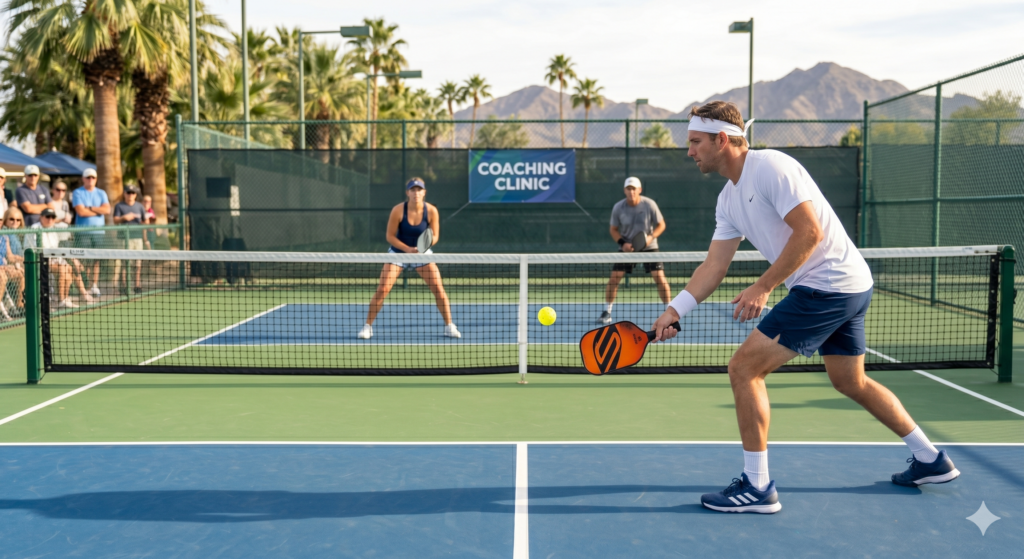
The third-shot drop is often considered the most important shot in pickleball.
A third-shot drop occurs after the following:
- Team A serves.
- Team B returns.
- Team A hits a soft shot into the opponent’s kitchen.
The purpose is not to hit a winner.
The goal is to:
- Slow down the rally
- Force opponents to hit upward
- Allow your team to move forward
Key Tips
- Use a relaxed grip.
- Focus on height rather than speed.
- Aim for the kitchen area.
- Practice consistency over perfection.
Even professional players rely heavily on this shot because it creates opportunities to gain control of the point.
Aim at Your Opponent’s Feet
Many beginners try to hit around their opponents.
A better strategy is often to hit directly at their feet.
Why It Works
Shots landing near the feet force opponents to
- Bend down quickly
- Hit upward
- Generate awkward returns
- Make more mistakes
Whether hitting drives, drops, or dinks, targeting the feet creates pressure and reduces offensive opportunities for your opponents.
Avoid the “No Man’s Land.”
The area between the baseline and kitchen line is often called “No Man’s Land.”
This position is problematic because players here are
- Too far back to volley effectively
- Too close to react comfortably to hard shots
Common Beginner Error
A player serves, moves halfway forward, and stops.
This leaves them vulnerable to:
- Fast drives
- Sharp angles
- Offensive volleys
Instead, either stay back temporarily or continue moving toward the kitchen line.
The middle zone should only be a transition area.
Communicate Constantly
Strong communication separates good doubles teams from great ones.
Even simple phrases can dramatically improve teamwork.
Examples include:
- “Mine!”
- “Yours!”
- “Switch!”
- “Out!”
- “Bounce it!”
Benefits of Communication
Good communication:
- Prevents confusion
- Reduces collisions
- Improves confidence
- Helps decision-making
Many lost points occur because both players think the other person will take the ball.
Clear communication eliminates this problem.
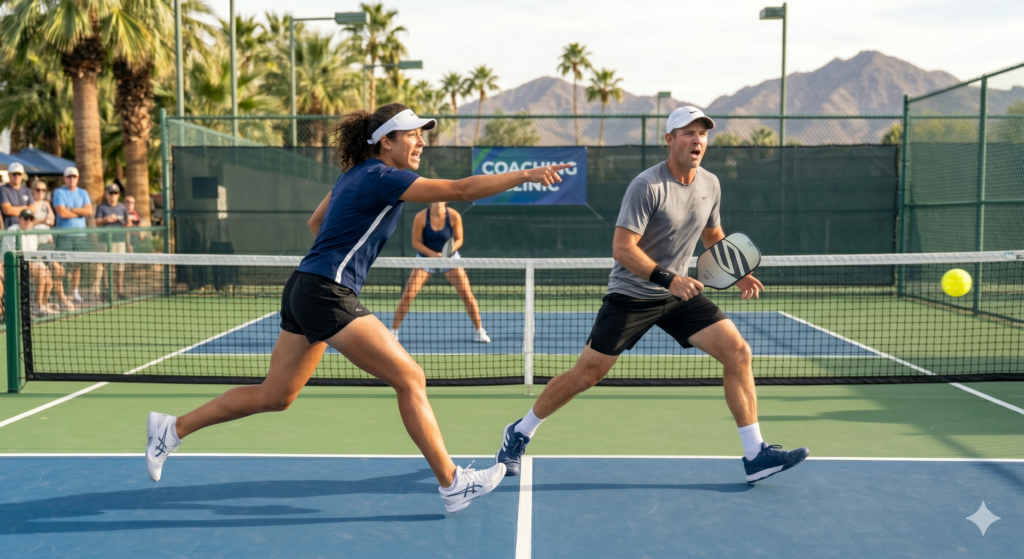
Be Patient During Dink Battles
Dinking is a soft shot that lands in the opponent’s kitchen.
Beginners often become impatient during extended dink exchanges and attempt low-percentage attacks.
Experienced players understand that patience creates opportunities.
What to Look For
Wait until your opponent
- Hits a ball too high
- Loses balance
- Leaves a gap
- Makes a positioning mistake
Rather than forcing an attack, allow the opportunity to develop naturally.
Many points are won simply by staying disciplined longer than your opponents.
Attack High Balls Only
One of the easiest ways to lose points is attacking from below net level.
If the ball is low, a hard shot usually ends up
- In the net
- Out of bounds
- Easily countered
Smart Offensive Rule
Attack when:
- The ball is above net height.
- You have good balance.
- You can maintain control.
Otherwise, reset the rally with a drop shot or dink.
This simple adjustment can immediately reduce unforced errors.
Target the Weaker Opponent
Every doubles team usually has one player who is slightly less consistent than the other.
This does not mean ignoring the stronger player entirely.
However, directing more shots toward the weaker player often produces better results.
Advantages
The weaker player may:
- Miss more shots
- Struggle under pressure
- Make poor decisions
- Create opportunities for your team
Observe your opponents early in the match and identify who is making the most mistakes.
Then apply steady pressure without becoming predictable.
Reduce Unforced Errors
At beginner and intermediate levels, most matches are not won through spectacular winners.
They are won because one team makes fewer mistakes.
Common Unforced Errors
- Hitting serves into the net
- Missing easy volleys
- Attacking low balls
- Poor positioning
- Overhitting
Instead of trying to hit perfect shots, focus on consistency.
A team that keeps the ball in play often wins simply by forcing opponents to make errors first.
Common Beginner Mistakes to Avoid
Even with good strategy, certain habits can slow your progress.
Standing Too Close Together
This reduces court coverage and creates vulnerabilities.
Staying Back After the Return
Giving up kitchen-line control puts your team at a disadvantage.
Trying to Win Every Rally Quickly
Patience is often more valuable than aggression.
Ignoring Your Partner
Doubles is a team sport. Work together rather than playing as two individual players.
Overusing Power
Placement and control generally outperform raw power.
A Step-by-Step Plan to Improve Your Doubles Game
If you want faster improvement, focus on these priorities:
Step 1: Master Kitchen Positioning
Learn when and how to move forward.
Step 2: Practice Third-Shot Drops
Spend dedicated practice sessions developing consistency.
Step 3: Improve Communication
Use clear verbal cues during every match.
Step 4: Develop Dinking Skills
Become comfortable with patient exchanges at the kitchen line.
Step 5: Study Court Movement
Learn to move with your partner as a single unit.
Step 6: Focus on Consistency
Reduce unforced errors before chasing advanced shots.
Turn Strategy Into Wins
Winning more doubles matches is not about having the most expensive paddle or the hardest drive. The players who consistently succeed are the ones who understand positioning, communication, patience, and smart shot selection.
Every rally presents an opportunity to apply these principles. Move with your partner, control the kitchen line, trust the third-shot drop, and remain patient when the pressure builds. As these habits become second nature, you’ll notice rallies lasting longer, mistakes becoming fewer, and victories arriving more often.
The beauty of pickleball doubles is that improvement can happen surprisingly fast. Start applying even a few of these strategies in your next match, and you may discover that the difference between losing and winning often comes down to decisions rather than athletic ability. The smartest team on the court frequently walks away with the victory.